Friday, February 12, 2010

Job, Orion and Anna


This entry is dedicated to the memory of our daughter Anna, z"l, who died two years ago, Het Nissan.  May her memory be for a blessing.  
            Robert Frost said, "In three words I can sum up everything I've learned about life: it goes on."  He knew what he was talking about.  He outlived 4 of his 6 children.  He outlived his wife.  And his only son to survive childhood died by his own hand.  Robert Frost lived to be an old, old man, teaching and writing and traveling.  Life goes on.
            It's been two years since our beloved Anna died.  We think of her every single day.  We miss her terribly.  We grieve, usually in private, sometimes, unavoidably and mercifully rarely, in public.  We go on.
            This loss feels like an amputation.  Like an amputee, I have lost, permanently, something valuable and irreplaceable.  Like many amputees, I've learned to limp onward, figuring out how to manage and do things and go on with life in spite of the loss.  Sometimes I manage so well that if someone didn't know, they might never guess that anything was missing. 
            Comfort comes in unexpected places.  As a Jew, I find strange comfort in the book of Job.  If you ever want to stop wallowing in self-pity, read Job and you'll gain some perspective.  I read it over and over last year, feeling at one with Job's challenging, cursing, and even threatening God.  Like Job, I could stand there in my integrity before God and say, "I did not deserve this, and Anna did not deserve this, and none of us did anything to deserve this" and know, as everyone who reads that first chapter of Job knows, that Job did nothing to deserve his suffering, that it all was planned on a cosmic level, that Job was, in God's own words, "אִישׁ תָּם וְיָשָׁר יְרֵא אֱלֹהִים וְסָר מֵרָעa man pure and upright, fearing God and turning from evil. Comfort lies in the fact that God answered Job; God cared enough to appear in that whirlwind; God showed up. 

            We parents take a lot on ourselves.  Though I believe we should, if life is going to go on, we eventually have to put down this burden o f guilt.  Not only is it too heavy to carry around, it's presumptuous.  Such suffering and pain as Anna felt are so huge that it's arrogant to think I'm at the center of it all.  I knew this, but of course I blamed myself anyway, and the pain of loss was sharpened by the pain of responsibility.
            But God justified Job to his friends (with their insidious accusations that I think must have been the products of Job's own conscience), and that justification must have been a strange comfort to Job, just as hearing Anna's wise and gentle therapist Dafna tell me, "Sue, you're not as important as you think; this isn't all about you" was a relief to me.  Ultimately, it wasn't Job's fault, and it wasn't mine, and it wasn't Anna's either.  As a mother, this is another strange place I find comfort.             
            After two years, the blame is, unbelievably, diminished.  What isn't diminished at all is the pain of missing Anna.  I read in a novel just the other day about a mother who missed her daughter, off in Europe.  The mother, Isobel, thinks about her daughter: "She was impossible.  She was also sweet, kind, funny, and overflowing with love.  Isobel missed her quite dreadfully."  I miss Anna quite dreadfully.  She was sweet, kind, funny, and overflowing with love, and she was also impossible.  How proud she would be of her siblings—whom she called "the creatures" (in the most loving way)--of Benjy's learning to read, and Jesse's following in her own footsteps in Tae Kwon Do (he periodically takes out her medals to admire, dreaming, perhaps, of getting his own), of Becky's budding acting career and Lulu's straight A's and mastery of Arabic.  And Josh, her adored younger brother, standing in his army uniform.  It hurts that she is missing all this.  So many times I would have turned to her and shared a knowing smile, waited for her subtle insights, her quirky humor, and that sparkle in her eyes when she'd come home from a good day (she had many of these).  "Anna," I'd call, "is that you?"  And she would say, "It is I!"  I am comforted by good memories.
            For me, though, the greatest comfort lies in that meeting place between God and man, between what we see and what we can know when we stand on earth and look at the sky.  An odd place to look for comfort, really, when most of what we see is dark and cold and unbelievably distant.  Why, too, should we look to God for comfort?  We want to hear God's  voice, we want to feel God's presence, but God is—to quote Professor Uriel Simon-- generally silent.  Or, like those glittering stars, cold and unbelievably distant.
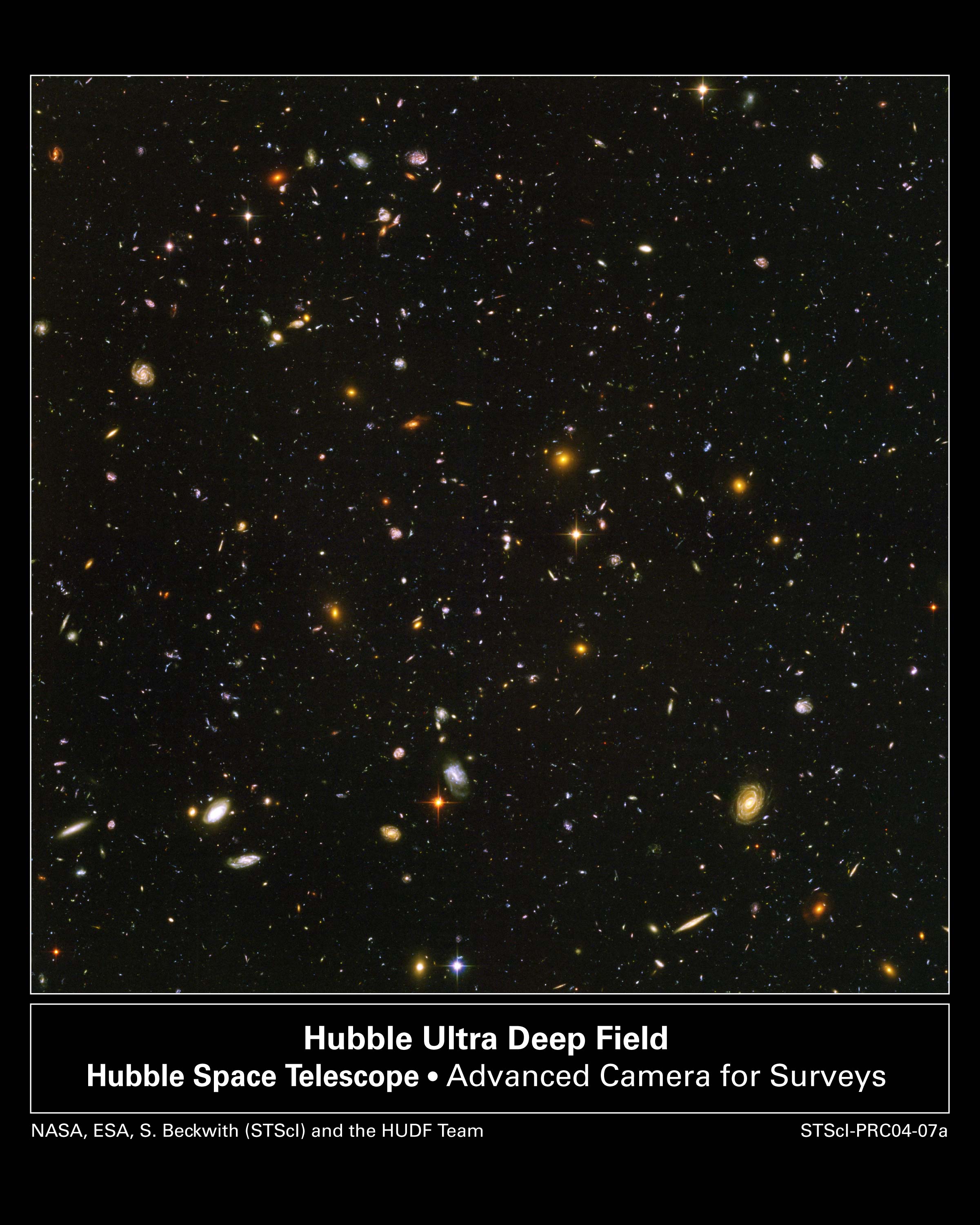
            Yet astronomers know that the sky blazes with spectacular beauty in its darkest corners.  When scientists sought out the most distant objects in the universe, they pointed the Hubble telescope at the emptiest, blackest section of the sky, an area without any stars or light, a veritable abyss as dark as the loss of a child.  They did this so that the stars of the Milky Way galaxy would not hide with their glare what was really out there, invisible from our perspective on earth.  What they found, of course, has been immortalized in the images of Hubble Deep Space and Ultra Deep Space—the galaxies of unimaginable shape and multitude and beauty that are revealed to us only because they lie precisely in the darkest parts of the sky we see from earth. 
            Job's final response to God has been characterized as one of meek acceptance of his lowly place in the cosmos.  But to me, it rings not with resignation and acceptance but with profound understanding and awe.  He speaks of נִפְלָאוֹת מִמֶּנִּי, וְלֹא אֵדָעwonders greater than I am, that I didn't know, now revealed to his eyes. 
            Like Job, we will never understand the reason for suffering, but we know that there was meaning to all of it.  We look at the sky and we remember that what is to our eyes the blackest and most empty part of the sky contains within it light and beauty, wonders greater than we are.

Thursday, January 28, 2010

Tu B'Shvat 2010: Harmony on earth, and Mars above

See full size image


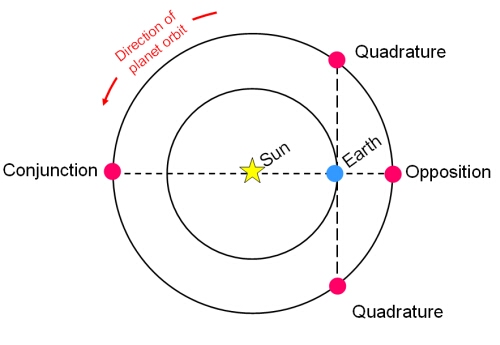
Tu B'Shvat, the festival of trees here in Israel, is a holiday that evokes the intrinsic harmony of nature, the existential beauty of God's creations here on earth and the myriad benefits we humans derive therefrom.  With such amity on the calendar, we may read with shock about what is happening at the same time in the heavenly sphere: MARS IN OPPOSITION!


 Mars by  Bill Flanagan.
Mars on Jan. 22, 2010Mars's name in English is for the Roman god of war, but its name in Hebrew, Maadim, denotes its pretty red (adom) hue rather than any military associations.  And "opposition" with reference to celestial bodies simply means that the planet is at its closest and brightest for this particular orbit.  So harmony reigns in the skies as well as on earth on Tu B'Shvat, and we can all relax.


Mars, reports the Astronomer, can be easily seen in the early evening as it rises in the east (OPPOSITE the setting sun)(sorry, Tom, but some of us are confused by these things) and is up all night.  Those sky gazers who can find Orion (look for the three bright stars of his belt) and his loyal dog, Sirius (the brightest star in the sky) will see Mars to the left of Sirius--about the same brightness ("apparent magnitude") but with its characteristic reddish-orange color.

Sky gazers for whom Orion remains elusive will have extra help locating Mars this weekend because the Moon will be shining in the same part of the sky both Friday and Saturday night.  On Friday, the Moon will be slightly above and to the right of Mars; on Saturday night, the Moon will be slightly below and to the right of Mars.

Sky and Telescope has a lovely, not-too-complicated guide for helping to locate these things.  The Moon in the picture is correct for the US.  In Israel the Moon will be a bit lower each night as described above.


http://www.skyandtelescope.com/observing/highlights/82407167.html

Happy viewing!
The Astronomer says: Keep looking up!

Monday, January 18, 2010

Solar Eclipse that was


Solar Eclipse in Efrat!

 הַשָּׁמַיִם מְסַפְּרִים כְּבוֹד-אֵל  וּמַעֲשֵׂה יָדָיו מַגִּיד הָרָקִיעַ
Psalm 19:2 The heavens declare the glory of God, and the firmament shows His handiwork

On Friday, the Astronomer got up early.  He'd spent a restless night, tossing and turning and worrying lest the clouds block the view and spoil a rare chance to show off one of the more spectacular celestial events of the year, a partial solar eclipse.

The Astronomer had been uncharacteristically organized, sending out notices to the Efrat email list the night before, checking all his equipment, lining up his children to help him.  I, the Astronomer's wife, kept a low profile and resolved to sweep up any pieces.  Plus, our neighbor Batya was giving a shiur that morning and I didn't want to miss it, especially for something I considered rather pedestrian, a mere partial eclipse, a paltry 24% coverage.  I'd skip it and see that the essentials (feeding kids breakfast, delivering children to school, being available to comfort the Astronomer should clouds run the whole plan amuck and he find himself alone on a street corner waiting for a patch of blue sky that would never come.

However, I had forgotten about the simple fact that, well, a solar eclipse, even a partial one, is really neat.  Words like "WOW!" and "SO COOL!" come out of the mouth involuntarily.  This was Becky's fault, really.  She needed a ride to school and the Astronomer had seen fit to give her a pair of sun filters so she could admire the eclipse in the car on the way there.  I was driving along, minding my own business, but it was just too much, having her there in the front seat, gawping up at the sun.  So I pulled over the car, grabbed the glasses from her, and took a look.

Suffice it to say I oohed and aahed.  Then I decided that everyone had to take a look at this.  I mean, everyone was just driving around as though it was a regular Friday morning; probably they had no idea there even was a solar eclipse.  Becky and I stayed there as long as we could, staring up with those funny glasses, but to my disappointment, though we garnered a few funny looks, no one stopped to ask what was so interesting.  Perhaps they feared I would tell them, at length.

So we tried another tack.  We picked up a few hitchhikers and Becky handed them the glasses.  They oohed and aahed and asked questions and stared some more and oohed and aahed.  One was a teacher, and I was tickled pink, thinking of how she was thinking of how she'd weave this wonder of the universe into her morning's lessons.  I dropped Becky and the other hitchhikers at their school, then hurried to the street corner to watch the Astronomer at work before I'd have to rush off to shiur. 

A happy, if modest, crowd had gathered around at the street corner, staring through filters or through the filtered telescope, or through pieces of those pinholed papers that show the eclipse's image onto a second paper.  Everyone was very happy, everyone was asking questions, the Astronomer was in his element.  Our own Sharon Katz, not, by her own admission, an early riser (oh, come on, it was well after 8AM!) had come especially to film the event and interview the Astronomer about eclipses and new moons and the molad.  He explained (patiently, and not for the first or the second time) that the molad is not the visible new moon we Jews think of in connection with Rosh Chodesh, the new month.  Rather, the molad is the conjunction of the moon and sun that happens every month.  Usually, this conjunction doesn't result in an eclipse because the moon is either above or below the sun as their paths cross.  Occasionally, however, the moon is right between the earth and the sun, blocking the earth's view of the sun, which we on earth experience as a total solar eclipse.  More frequently, the conjunction  is a partial one; that is, the moon blocks only a section of the sun, which we on earth see as a partial solar eclipse—only if we happen to look up (with our solar filters, of course).

In the shiur I attended later that morning (after I tore myself away from the excitement at the street corner), someone mentioned that the study of nature might lead to man's worshiping nature instead of nature's Creator.  Instead of letting our learned teacher response, I butted in (still bubbling over with residual excitement) that today's celestial event, the partial solar eclipse, was an excellent example (imho) of the opposite: A person who studied nature might conclude, for example, that the sun—powerful, the source of our life—was worth of being worshiped.  And yet, a simple observation of a regular phenomenon like a partial solar eclipse showed clearly that powerful as the sun is, a small, relatively insignificant object like the moon can block its light and its warmth.   Moreover, the moon does so on a regular basis!  Something else is in charge, something else is in control . . .

Sharon asked the Astronomer, "Are there really so many celestial events happening all the time, or do we just hear about them because we (Efratians) have you?"  The Astronomer laughed and said, "There really are events happening all the time: You just have to know where to look."

Keep looking up!


Sharon's blog and video, featuring the Astronomer


And here's a link to the Astronomer's own photos:


Gadi's report and lovely photos too:

Thursday, January 14, 2010

Sunspots are back!

After a very quiet season, we have some new sunspots.
Thanks Gadi for pointing this out.

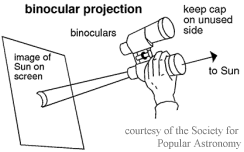
Just looking at the sun with a filter will not show them as they are usually too small, but if you set up a projection with a small telescope or binoculars you can. Or if you want to be really lazy, or just view them at night, you can see almost live pictures at Space Weather

See if you can find them during the partial eclipse on Friday.

24% Solar Eclipse this Friday morning

On Friday Jan 15th there will be an annular solar eclipse over central Africa and the far East. Here in Israel it will be partial with a maximum of 24% of the Sun covered by the Moon.
A05-100002n
 Partial Eclipse

Most people will not notice anything unusual, as even 76% of the Sun is very bright.  However, anyone with the correct equipment for viewing the sun will be able to see an obvious bite missing at the peak of the eclipse.

For safe solar viewing methods, see these:

Solar eclipse Friday, Jan 15:
06:41 Sun (& Moon) rise
07:04 partial eclipse visible in Israel
08:03 peak of eclipse in Israel (24%) 15 degrees above SE horizon
09:11 end of eclipse in Israel

(and for you calendar freaks):
09:12 molad
13:23 average molad

This will be a great opportunity for some sidewalk astronomy. So invite your friends and neighbors and show them a bit of solar system choose a location with a good view of the eastern horizon. To double check, go out a few days earlier at 8am and note where you can see the Sun.

If you are planning something please share it with the list at astrotom@yahoogroups.com 

Solar Viewing Safety

I have had a few inquiries asking for details about safely viewing the sun, so I will summarize below.

For the full details see NASA's Fred Espenak Mr. Eclipse page.

There are 2 basic safe ways to view the sun (it does not matter if it is partially eclipsed or not).

1) Projection method.
    This involves using some kind of lens to project an image of the sun onto another surface.The simplest "lens" is just a pinhole. You can easilly make a pinhole in a piece of cardboard,
    Photo: Use Your Handsor even just use your fingers!


    2) Filter method
      You will need filter especially made for viewing the sun.

      You can get these in Israel or online. E.g.
      You can also use a number 14 (or better)  welders glass. These are available locally in many hardware stores.


      Here is a quick and easy projection method from the Exploratorium.

      How-To Images
      (Click on the image for expanded instructions)
      If you want, you can use only two pieces of cardboard--one piece colored white to project on to, and the other with a pinhole. Hold up the pinhole as far from the screen as you can. Remember, the farther you are from the screen, the bigger your image.
      Photo:Tree ShadowsPhoto: Use Your HandsGetting even more basic, you can use your own hands. Just hold up both hands with your fingers overlapping at right angles. The holes between your fingers make pinholes.
      If you have some shade trees in your location, try looking at the images of the sun coming through the holes formed by the leaves. A piece of white posterboard is all you may need to have a great viewing session!


      Or if you have a simple pair of binoculars you can these instructions from NASA:


      Wednesday, January 13, 2010

      Eclipse photography

      Gadi has posted a very nice video of the last lunar eclipse  with instructions on how to do it yourself on his blog